Keynote Speakers and Session Chairs
Opening lecture
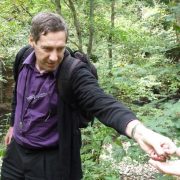
Thomas Kuyper
Thomas is a professor emeritus in fungal ecology and diversity at Wageningen University and a visiting scientist at Naturalis Biodiversity Centre, Leiden. He obtained his PhD in fungal taxonomy at Leiden University in 1986, subsequently worked as an assistant professor at the Biological Station Wijster (1985-2000) before moving to Wageningen. He has studied both saprotrophic and mycorrhizal fungi in natural and agro-ecosystems in temperate and tropical areas. He has served the Netherlands Mycological Society in a number of functions (secretary; chairman; chair of several committees including the committee on vernacular names for Dutch fungi).[/modal_popup_box]
Theme 1: Cell biology, biochemistry and physiology
Chairs:
Han Wosten (Netherlands), Jan Dijksterhuis (Netherlands)
Keynotes:
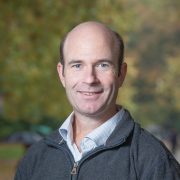
Alexander Idnurm
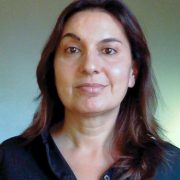
Meritxell Riquelme Pérez
She is a member of the Mexican Academy of Sciences. In 2018 she received the B. O. Dodge award for her contributions to the Neurospora research community and in 2019 she was elected Fellow of the Mycological Society of America. She is editor of the journals Fungal Genetics and Biology, The Cell Surface, Communications Biology, and Frontiers in Cell and Developmental Biology. Previously she was editor of Fungal Biology. She has served in the Mycological Society of America (MSA) as member of the Karling Lecture Committee (2005-2008, chair 2007-2008), of the Genetics and Cell Biology Committee (2008-2010, chair 2009-2010), and as councilor for Cell Biology/Physiology (2014-2016). She served as member of the Neurospora Policy Committee (2008-2012), the Fungal Genetics Policy Committee (2013-2019), the International Fungal Biology Conference Steering Committee (since 2014), and the Executive Committee of the International Mycological Association (since 2014).[/modal_popup_box]
Theme 2: Environment, ecology and interactions
Chairs:
Duur Aanen (Netherlands), Yu Fukasawa (Japan)
Keynotes:
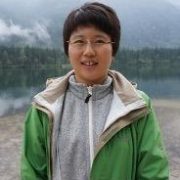
Maiko Kagami
Graduate School of Environment and Information Sciences
Yokohama, Japan
Maiko Kagami is a Professor in Graduate school of Environment and Information Sciences, Yokohama National University, Kanagawa, Japan, since April 2018. Her research interests lie in the area of aquatic ecology, examining the dynamics and roles of plankton and microbes in biogeochemical cycling.
Maiko completed her Ph.D. at Kyoto University, Japan in 2002. During her Ph.D., she examined plankton dynamics in Lake Biwa, and found the importance of parasitic fungi infecting phytoplankton.
From 2002-2006, she worked as a JSPS research fellow (postdoc) in the Netherlands Institute of Ecology (NIOO-KNAW), Center for Limnology. She discovered the new material flow via parasitic fungi in aquatic food webs, which was named as Mycoloop after Mycology and her name (Maiko).
From 2006 September, she became a faculty member, a lecturer (2006-2012) and associate professor (2012-2018) in Department of Environmental Science, Faculty of Science, Toho University, Chiba, Japan. She continued her research line of aquatic ecology.
Maiko has actively collaborated with oversea researchers, particularly Germany and Netherlands. She has been PIs of several Grants-in-Aid (KAKENHI), including those promoting international collaborations. From 2016-2018, she has been a PI of the Fund for the Promotion of Joint International Research (Fostering Joint International Research) and stayed for 1.5 year as a guest researcher at Leibniz-Institute of Freshwater Ecology and Inland Fisheries (IGB-Berlin) in Germany and at Netherlands Institute of Ecology (NIOO-KNAW) in the Netherlands.[/modal_popup_box]
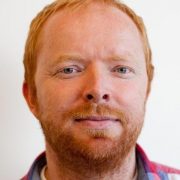
Håvard Kauserud
Theme 3: Evolution, biodiversity and systematics
Chairs:
Jos Houbraken (Netherlands), Lei Cai (China)
Keynotes:
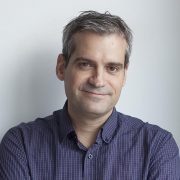
Toni Gabaldón
Toni is a ICREA Research professor, and group leader at the Institute for Research in Biomedicine (IRB), and the Barcelona Supercomputing Centre (BSC), and associate professor at the UPF. He leads the comparative genomics groups. His main research interests are in the fields of genomics and evolution with significant contributions to the understanding of how genes, pathways, organisms and communities evolve and function.[/modal_popup_box]
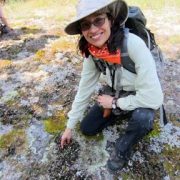
Jolanta Miadlikowska
Jolanta a Senior Researcher at Duke University, Department of Biology. She received her Ph.D. in Biology from the University of Gdansk in Poland in 1999 and completed five years of postdoctoral research at Duke University. She is a systematist interested in biodiversity, taxonomy, phylogenetics and evolution of lichenized Ascomycota, with a special emphasis on cyanolichens from the genus Peltigera and their cyanobacterial photobiont Nostoc. She also studies the eco-evolutionary mechanisms and factors shaping interactions among lichen symbionts using peltigerous lichens as a model system. Her research integrates traditional specimen-based revisionary methods (morphology-, anatomy-, and chemistry-based approaches) and molecular phylogenetic tools, including genomic data, focusing on both the fungal and Nostoc partners. Jolanta is also part of the NSF-funded GoLife project exploring biodiversity, ecological factors and biogeographical patterns in endolichenic and endophytic communities associated with lichens and plants.[/modal_popup_box]
Theme 4: Fungal pathogenesis and disease control
Chair:
Juan McEwen (Colombia), Wieland Meyer (Netherlands)
Keynotes:
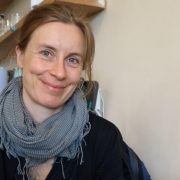
Eva Stukenbrock
The research of Eva Stukenbrock focuses on the ecological interactions and co-evolution of fungi associated with plants. Since her PhD at the ETH in Zurich, she has used the plant pathogenic fungus Zymoseptoria tritici as a model to study pathogen evolution. During her post doc at Aarhus University, Denmark she worked with Prof. Mikkel Schierup to apply whole genome coalescence analyses to infer the speciation history of Z. tritici and related Zymoseptoria species. In 2010, she was appointed group leader at the Max Planck Institute for Terrestrial Microbiology in Marburg, Germany, and since 2014 she is Max Planck Fellow and professor at Kiel University.
Her group integrates computational biology with experimental and molecular approaches to study mechanisms of host specialization of plant pathogens.[/modal_popup_box]
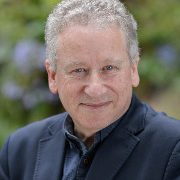
Neil A.R. Gow
[/modal_popup_box]
Theme 5: Genomics, genetics and molecular biology
Chairs:
Miia Mäkelä (Finland), Ronald de Vries (Netherlands)
Keynotes:
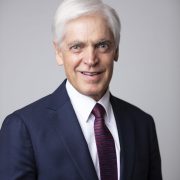
Sakkie Pretorius
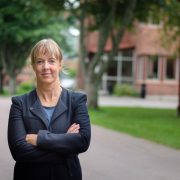
Hanna Johannesson
Theme 6: Applied Mycology
Chairs:
Nancy Keller (USA), Richard Belanger (Canada)
Keynotes:
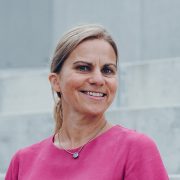
Sarah De Saeger
She is coordinator of the international thematic network MYTOX-SOUTH®.
She has been elected as President of the International Society of Mycotoxicology (ISM) in 2021.
In 2022, she became Member of the Royal Flemish Academy of Belgium for Science and the Arts.
Her research focuses on mycotoxin detection methods, metabolomics and untargeted analysis, mycotoxins and human health, and exposomics.
Research results are published in more than 400 A1 peer reviewed papers (web of science h-index 58).
She was an expert in EFSA CONTAM working groups (2011-2018) and a member of the Scientific Committee of the Belgian Federal Agency for Food Chain Safety (2015-2020). In 2015 she was awarded the Ghent University Prometheus Award for research.
Moreover, next to the research activities, she is the Department Chair of Bioanalysis at the Faculty of Pharmaceutical Sciences, as well as the Faculty Director of Studies since 2022.[/modal_popup_box]
Han Wösten
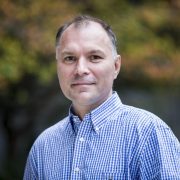
Han obtained his PhD from the University of Groningen (The Netherlands) in 1994. He was appointed assistant professor at the same university in 1998 after post-doc positions at the universities of Munich (Germany) and Groningen. In 2001, he obtained a chair in Microbiology at the University of Utrecht (The Netherlands). Han’s research focuses on fungal growth and development. He is interested to use fungi in the transition to a sustainable and circular economy.[/modal_popup_box]
Theme 7: Nomenclature
Chairs:
Tom May (Australia), Konstanze Bensch (Germany), Bevan Weir (New Zealand)
Keynotes:
Mary Catherine Aime
Robert Lücking
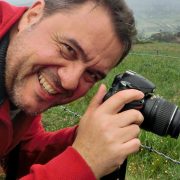
Robert obtained his PhD in Natural Sciences from the University of Ulm (Germany) in 1994. After a visiting professorship at the Federal University of Pernambuco, Recife (Brazil), in 1998 and a postdoc to obtain his habilitation in Botany at the University of Bayreuth (Germany) in 2001, he became Collections Manager & Adjunct Curator (Lichens & Fungi) at the Field Museum, Chicago, where he worked until 2015. Since 2015, Robert is Curator (Lichens, Fungi, Bryophytes) at Botanic Garden and Botanical Museum of the Freie Universität Berlin, Germany. Robert’s research focuses on tropical lichens (taxonomy, systematics, evolution, ecology, biogeography, uses) and more recently on fungal evolution, systematics, and nomenclature.[/modal_popup_box]